The Joy of Trump

Vancouver Island Eyes on the World


Saturday, June 14, 2014

Mein Kampf


Adolf Hitler's Mein Kampf at centre of fresh controversy

As copyright expires, debate rages over whether book should be studied or buried

In Germany, copyright disappears at the end of the 70th anniversary year of the author’s death. Adolf Hitler’s suicide in his Berlin bunker in the spring of 1945 means Bavaria loses control of Mein Kampf at midnight of December 31, 2015. (Torsten Silz/The Associated Press)

Adolf Hitler’s Mein Kampf  is one of the biggest bestsellers of all time, going through more than 1,000 editions and selling more than 12 million copies between its original publication in 1924 and 1945. 
It still sells strongly long after its creator’s death and it remains in the public eye as it continues to generate news coverage and commentary.

And nearly three-quarters of a century after the author took his own life, it’s still causing legal and political uproar in Germany.

German Nazi leader Adolf Hitler is pictured here in 1941. Hitler had been a struggling artist in Vienna, Austria, prior to entering politics. (Associated Press)

Immediately after the war the Free State of Bavaria scrambled to seize all of Hitler’s assets.

Included on this list were all of his copyrights, including the one to his infamous biography-cum-manifesto Mein Kampf.

Since Bavaria controlled copyright on the book, it controlled publication. It has allowed virtually no legal versions of the Hitler’s screed to be produced in Germany since the end of the war.

But in Germany, copyright disappears at the end of the 70th anniversary year of the author’s death. Hitler’s suicide in his Berlin bunker in the spring of 1945 meant Bavaria loses control of Mein Kampf at midnight of December 31, 2015.

Hitler's Mein Kampf has appeared in more than 1,000 editions and been translated into multiple languages since its original publication in 1924. (Copyright Institute of Contemporary History Munich - Berlin)


At the beginning of 2012 the interests of the Free State of Bavaria and Germany’s leading research centre on the Nazi movement seemed to converge.

The Institute of Contemporary Studies in Munich has since the 1940s overseen analysis and critical commentary on most of Hitler’s written and spoken words. But Bavaria’s effective ban on the most famous work of all, Mein Kampf, kept it away from this work.

However, with the prospect of copyright ending, the Institute launched work on the world’s first critical edition of Mein Kampf in 2010.

Two years later, Bavarian politicians and government officials decided getting a critical edition of Mein Kampf to market at the same time as an anticipated flood of uncritical Neo-Nazi editions was a good thing. They offered the Institute a contribution of 500,000 euros, or nearly $750,000 Canadian, to speed the work - an offer which was accepted.

All went well with the project until December 2013, when the Bavarian Free State’s political leader, Minister-President Horst Seehofer, had a change of heart.  Seehofer, without warning, cancelled funding for the project.

It soon became clear in Bavaria, though, that Minister-Seehofer had over-reached in his action.

His critics argued that continuation of harsh censorship of Mein Kampf  was unseemly in a modern, democratic Germany. And attacks on and threats of sanctions against some of the state’s most respected scholars was called unthinkable.

After more than a month of unremitting political pressure, a face-saving compromise was announced by the Seehofer administration.

In January 2014, the 500,000 euros originally given by the State of Bavaria for the project was reallocated to other projects run by the Institute of Contemporary Studies. That allowed the organization to channel other money into the new edition of Mein Kampf.

The new critical edition of Mein Kampf is scheduled to appear the moment copyright expires on New Year’s Day, 2016.

One of the world’s foremost experts on Hitler’s writings, Professor Neil Gregor of the United Kingdom’s University of Southampton, is the author of the newly reissued book How To Read Hitler, expresses mixed feelings about the uproar....


Link: http://www.cbc.ca/ideas/episodes/2014/06/06/the-struggle-over-mein-kampf/

[Sean Prpick is a journalist and freelance writer based in Regina. His audio documentary for CBC radio's Ideas, The Struggle Over Mein Kampf - takes an in-depth look at what's considered one of the most dangerous books in history.]
[Listen to Sean Prpicks full audio documentary on CBC radio's Ideas, The Struggle Over Mein Kampf.]




Thursday, May 29, 2014


Embedded image permalink

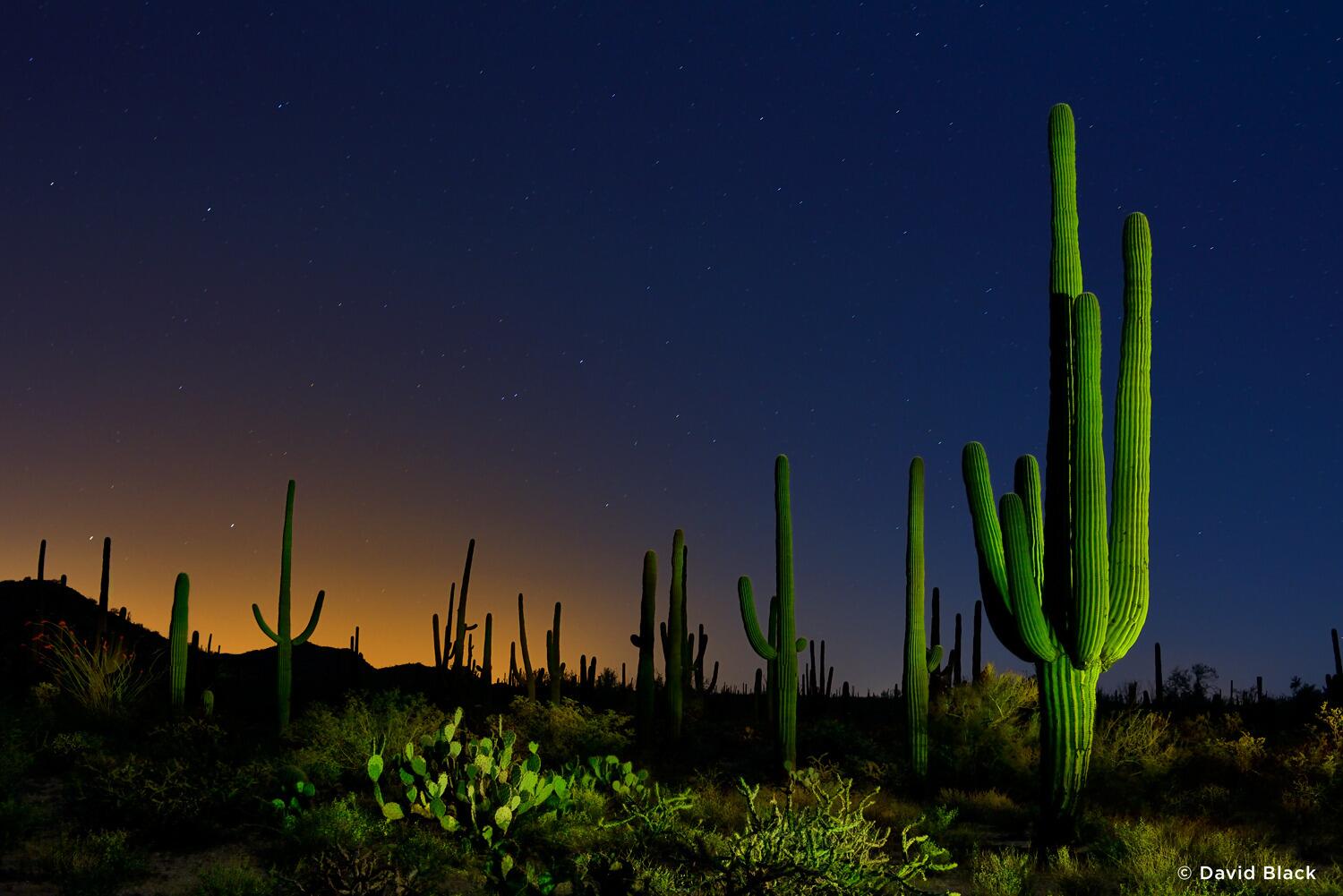
Extreme Team member Dave Black used lightpainting to capture this image near Tucson, Arizona #SanDisk


Embedded image permalink


Embedded image permalink
A bear and her cubs in Denali National Park in Alaska


Embedded image permalink


Embedded image permalink


Embedded image permalink


Embedded image permalink


Embedded image permalink


Embedded image permalink


Embedded image permalink


Embedded image permalink


Embedded image permalink


Embedded image permalink


Embedded image permalink

Embedded image permalink


Clown Fish

Embedded image permalink

Monday, March 31, 2014

Twitter Samples


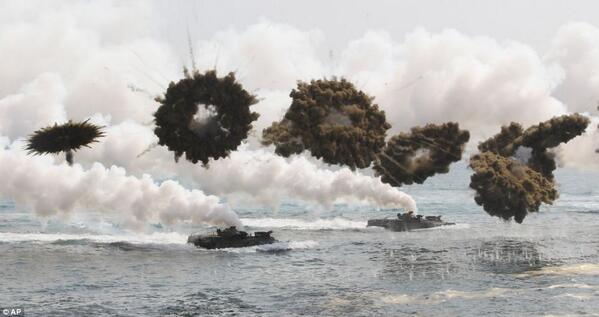
North and South Korea exchange fire across disputed sea boundary


  2m
A feminist, a sex symbol and an icon: Why Wonder Woman is the greatest super-heroine ever via


UN court rules against Japan ; International Court of Justice says hunting is not for scientific purposes:


Japan told to halt Antarctic whaling by international court  
  Guardian

Japan told to halt Antarctic whaling by international court

Japan will have to halt whale hunts after judge rules it failed to justify the large number of minke whales it kills in the Southern Ocean


Our seven key forward-looking areas of focus for the coming year


Embedded image permalink


11m
Exclusive adaptation from Michael Lewis's "Flash Boys" in :
The New York Times
View this content on The New York Times's website

An Adaptation From ‘Flash Boys: A Wall Street Revolt,’ by Michael...

How a band of outsiders discovered that the stock market was rigged — and set out to change it.


13m
The number of millionaire households in the US is the highest it has been in years


15m
Euro zone inflation drops to lowest since 2009


17m
16 Totally True Facts About Pugs


JUSTICE FOR WHALES! Japan's whaling ruled illegal.


Embedded image permalink

29m
An Egyptian Britney? Video of schoolgirl dancing goes viral and she probably IS that innocent:


Embedded image permalink
1h
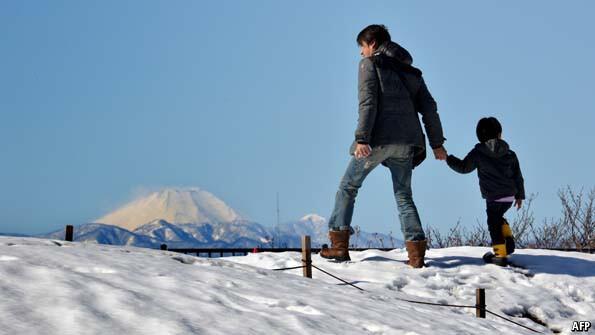
Japan's population began falling in 2004 and is now ageing faster than any other on the planet


Take It Easy


View this content on Grist List's website

Tiny house for two? Yes, this dating site is real

Tiny house people have needs, too. And slowly, a few enterprising souls are popping out of the reclaimed woodwork to fulfill them.

2m
Tiny house for two? Yes, this dating site is real


White House announces plan to combat methane emissions

White House Releases Plan To Address Potent Greenhouse Gas

WASHINGTON -- The White House released a new strategy Friday to address methane emissions from landfills, mines, agriculture, and the oil and gas sector. Methane -- a greenhouse gas 34 times more...


Sunday, March 30, 2014

Gold Mining


Photo: Two University of Tasmania researchers have challenged our current understanding of how gold dense regions or 'reefs', such as Bendigo in Victoria, form. Their work suggests that, instead of gold deposits being generated deep below the crust, they were transported around Australia by an ancient river.

Read more: http://bit.ly/1gAOpSv


Two University of Tasmania researchers have challenged our current understanding of how gold dense regions or 'reefs', such as Bendigo in Victoria, form. Their work suggests that, instead of gold deposits being generated deep below the crust, they were transported around Australia by an ancient river.

Read more: http://bit.ly/1gAOpSv


Earth Hour

 
Help Nemo (and other clownfish) stay home by switching off your lights for Earth Hour this Saturday from 8.30-9.3pm, wherever you are in the world. The campaign this year is focussed on protecting Australia's Great Barrier Reef.

Find out more about how you can support Lights Out For the Reef: http://bit.ly/1dzu3ZF
 
Photo: Help Nemo (and other clownfish) stay home by switching off your lights for Earth Hour this Saturday from 8.30-9.3pm, wherever you are in the world. The campaign this year is focussed on protecting Australia's Great Barrier Reef.

Find out more about how you can support Lights Out For the Reef: http://bit.ly/1dzu3ZF


b

Saturday, March 29, 2014

Dragonfly covered in morning dew.


Beautiful shot of a dragonfly covered in morning dew.

Here are 4 things you didn’t know about these amazing creatures
→ Their larval stage can last up to two years.
→ They can catch prey by grabbing it with their feet.
→ A single dragonfly eats hundreds of mosquitoes a day.
→ The globe skinner dragonfly has the longest migration of any known insect.

Read more: http://bit.ly/1h6taHH via Smithsonian magazine