The Joy of Trump

Vancouver Island Eyes on the World


Saturday, November 30, 2013

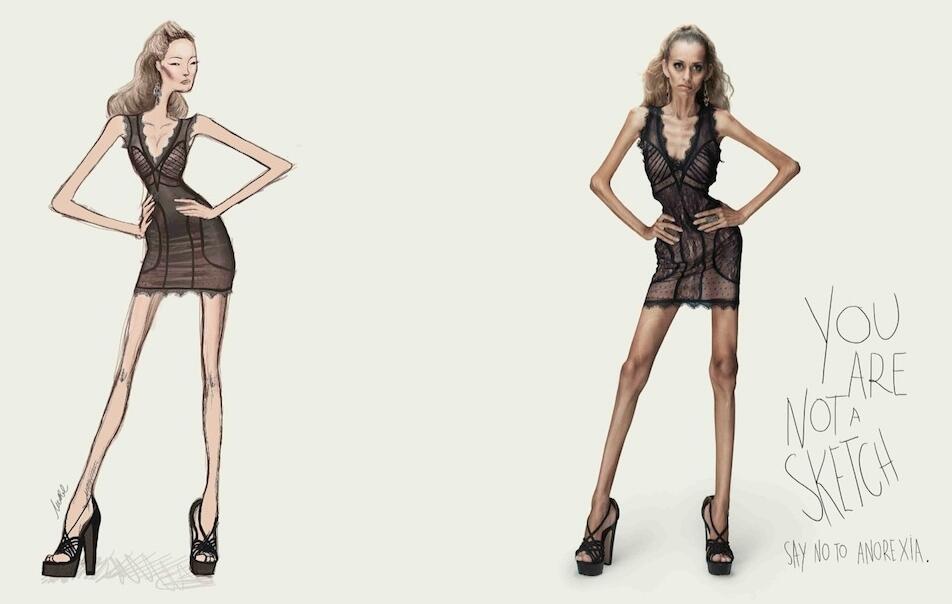
Fashionable Body Image

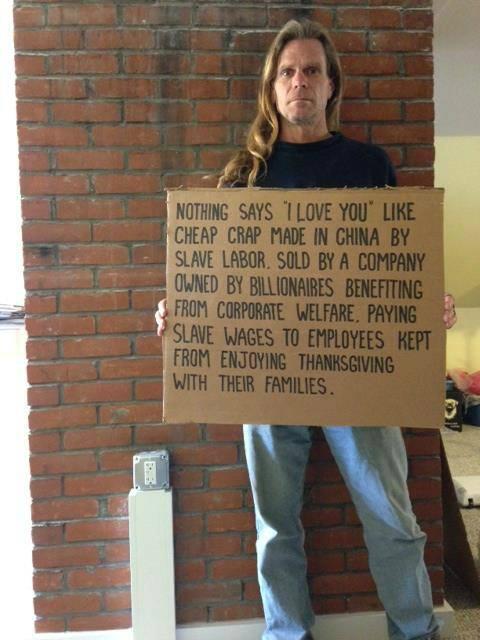
Thanksgiving Protester

Embedded image permalink

The Canine's Culinary Christmas Cupcakes


Embedded image permalink


The Canine's Culinary Christmas Cupcakes

Who is a 'journalist'? People who can afford to be


A US Senate panel's attempt to define 'journalist' pleases some and dismays others.


On September 12, a US Senate panel approved legislation designed to protect journalists from having to reveal their confidential sources. In order to do this, the panel had to define "journalist". According to the proposed law,

 a journalist is "an employee, independent contractor or agent of an entity that disseminates news or information … [who has been] employed for one year within the last 20 years or three months within the last five years.”

The definition was met with approval by some and dismay by others.
Politico, a website that tracks the minutiae of the DC elite, praised it as "a step forward for independent and non-traditional media organisations." 
The Electronic Frontier Foundation, an organisation that seeks to protect free speech online, decried it as offering insufficient protection for independent bloggers, reiterating their earlier argument that "Congress should link shield law protections to the practice of journalism as opposed to the profession.”
The Senate debate over who is a "journalist" arose in the aftermath of WikiLeaks, whose activity has been defined as both journalism and espionage. Expanding the definition of a journalist means expanding the legal protection journalists receive.

"I can't support it if everyone who has a blog has a special privilege … or if Edward Snowden were to sit down and write this stuff, he would have a privilege. I'm not going to go there," said Senator Diane Feinstein, in a statement Matt Drudge denounced as "fascist”.

The debate over who is a journalist is a debate over journalistic privilege.
But in a prestige economy, the privilege to protect the confidentiality of sources is not the only privilege at play.

Today people work for the possibility of working, waiting to be considered good enough to be hired by the employers under whom they already labour.


Journalism is increasingly a profession only the wealthy can enter.
To narrow the definition of "journalist" to those affiliated with established news organisations denies legal protection not only to organisations like WikiLeaks, but also to the writers and bloggers who cannot afford the exorbitant credentials and unpaid internships that provide entry into the trade.

"The journalists who can tell my story - the story of urban or inner-city America - have taken a job in marketing while disseminating their opinions on blogs," writes freelancer David Dennis. Since the recession began in 2008, racial diversity in the media has declined while gender imbalance has remained high. The bloggers to whom Dennis refers would have no legal protection under the Senate's definition.

Whom would the Senate's definition protect? Journalists employed at established publications, who are mainly white men from privileged backgrounds - a category of people who may have little interest in critiquing the establishment that benefits them. The Senate's definition of journalist protects the people who need it least.


The price of journalism today


What does it take to succeed in journalism today?
For Canadian writer Alexandra Kimball, it was a surprise inheritance. Only after a financial windfall was her freelance career possible.


"To be a writer in this market requires not only money, but a concept of ‘work' that is most easily gained from privilege,"
she writes. "It requires a sense of entitlement … and requires you to think of working for free - at an internship, say, or on one of those gratis assignments that seem to be everywhere now - as an opportunity rather than an insult or a scam.”

As digital media gave more writers a voice, qualifications for journalism jobs became more stringent and dependent on wealth.
This is true worldwide. 


In 2009, the average cost of journalism school, often a prerequisite for hire in the US, was $31,000. Some universities charge over $50,000, along with living expenses the total bill can be above $80,000 (median US income is $52,000.) 

A British government report showed that in the UK, journalism is the third most exclusive profession to enter, with the greatest decline in social mobility among its practitioners.

The predominance of privilege has led to a deterioration of journalistic standards. "The people who have time to fool around for no money are the people who already have lots of it," writes journalist James Bloodworth. 

"And if they are the journalists of the future our media will probably resemble the establishment talking to itself, and if that's the case we will all be worse off, not only us hacks.”

Entry-level jobs in journalism have been replaced with full-time internships dependent on other internships. Today people work for the possibility of working, waiting to be considered good enough to be hired by the employers under whom they already labour.


Over the past decade, most internships in journalism have been unpaid.
Even The Nation, a magazine known for its exemplary coverage of labour exploitation, paid its interns less than minimum wage until the interns protested. They will now make minimum wage - a salary which, in New York City, still locks out the majority of applicants.


Only the rich can afford to write about the poor.

Many [journalists] lack consistent employment along with health care or a living wage. Now, under the Senate's definition, they may lack legal rights as well.


Protests against unpaid internships - and unpaid writing, a practice common in publications like The Atlantic and The Huffington Post - are on the rise. But the bulk of journalists remain vulnerable. Many lack consistent employment along with health care or a living wage. Now, under the Senate's definition, they may lack legal rights as well.


In an economy this unstable, there is no such thing as a fixed professional identity. The ability to protect the confidentiality of one's sources should not depend on one.


Unequal pay


The plight of journalists is emblematic of broader trends in the prestige economy. In multiple professions, workers are performing nearly identical tasks for radically different salaries.

In academia, the tenured professor and the adjunct may teach the same courses and publish in the same journals, but only the latter earns poverty wages. In policy, unpaid interns often write and research the papers for which their well-compensated superiors get credit. And in journalism, freelancers often receive nothing while their staff equivalents earn lavish salaries.


Title may determine whether a journalist will get to maintain the right to confidentiality. But title is an arbitrary measure. It does not show professionalism so much as prestige, ethics so much as affluence and luck.

In an economy in which full-time work has been replaced by part-time labour, it is very easy to lose one's professional affiliation, and the benefits - both material and reputational - it provides. Many do not define themselves as one thing but move in and out of different professions, struggling to find what work they can.


Kelly J. Baker, a well-published PhD working, like most scholars, as an adjunct professor, was told at a conference that she was "not a real academic" because she lacked a tenure-track job. "What the hell was I supposed to say to students now?" she recalls thinking. "Please ignore me as I contemplate my lack of reality? Don't listen to me because I don't matter?”

The Senate's definition of "journalist" applies that same standard to unaffiliated writers and reporters: do not listen to them, because they do not matter. Do not protect them, because what they offer is not worth protecting - although it may be worth prosecuting.

Credibility is not something that can be bought, but credentials are. Using affiliation as a criterion to define "journalist" means only the privileged get journalistic privilege. The Senate's target may be WikiLeaks, but their proposed ruling gives a de facto demotion to writers locked out for economic reasons.


Journalists of prior generations worked their way up.  Today, journalists are expected to start with an elite status and accept wages that have dwindled to nothing.


The result is that journalism is a profession which most Americans cannot afford to formally enter. The Senate should not be able to determine who is a journalist, when the people whom they represent cannot afford to determine that themselves.


17 Sep 2013 
Sarah Kendzior

Sarah Kendzior is a St Louis-based writer who studies politics and media.

You can follow Sarah on twitter @sarahkendzior

The views expressed in this article are the author's own and do not necessarily reflect Al Jazeera's editorial policy.


Link:
http://www.aljazeera.com/indepth/opinion/2013/09/201391764312806487.html


Row over US mobile phone 'cockroach backpack' app


Row over US mobile phone 'cockroach backpack' app


Critics say that the 'electronic backpack' is inhumane


A US company that has developed an "electronic backpack" that fits onto a cockroach allowing its movements to be controlled by a mobile phone app has defended itself against cruelty claims.


The Backyard Brains company says that the device is intended to get children to be interested in neuroscience.


A spokeswoman told the BBC that the device - being formally launched on Saturday - was not a gimmick.

But critics say that the company's stance is "disingenuous".

For the "electronic backpack" to work the cockroaches have to be placed in icy water to subdue them before sandpaper is used to remove the waxy coating on the shell of the insect's head.


An electrode connector and electrodes are then glued on to the insect's body and a needle is used to poke a hole in their thorax in order to insert a wire.

Their antennae are then cut and electrodes are inserted. A circuit is attached to their backs, and signals are received through a mobile phone app allowing users to control the cockroaches' movements to the left and to the right.

Animal behaviour scientist Jonathan Balcombe has been quoted on US scientific websites as saying that the insects are harmed in the process.

"If it was discovered that a teacher was having students use magnifying glasses to burn ants and then look at their tissue, how would people react?" he is quoted as saying.

Likewise Queen's University philosophy Professor Michael Allen warned that the device will "encourage amateurs to operate invasively on living organisms" and "encourage thinking of complex living organisms as mere machines or tools".

The Michigan-based company has even received emails saying the the backpack - known as Roboroach - "teaches kids to be psychopaths". 


Roboroach works by controlling the movements of the cockroach through electrodes that connect to a smartphone via Bluetooth.
Critics say that the "electronic backpack" is cruel and subjects the insects to unnecessary stress.
To attach the backpack, the insect is immersed into ice water to subdue it. Electrodes are stuck to it using glue and groundwire is inserted into the thorax.


The Roboroach weighs 4.5g and is compatible with most mobile phones. It overrides the insect's antennae making it turn left and right at the flick of a switch.

But Backyard Brains says that 20% of the world will soon have a neurological disorder - for which there are no known cures - and the backpacks "allow students to do graduate level research early in life".

A company spokeswoman told the BBC that the backpack had been developed solely to encourage children to take an interest in neuroscience which, she said, needed to be better taught in American schools.

"At the moment this crucially important subject is woefully under-taught," she said, "with many schools teaching neuroscience within the biology syllabus when it should be a subject in its own right.

"That is especially the case when diseases of the brain such as Alzheimer's take a heavier toll within society."

The spokeswoman insisted that the insects are treated humanely and that the backpack - first developed in 2011 - does not harm them.


The backpack will be widely available in November in the US priced at $99 (£61).

 Cockroach facts

There are about 4,600 species of cockroach and fewer than 30 of these are considered pests. (There are about 5,400 species of mammals)
The world's smallest cockroach is only 0.3mm long and lives in ant nests
The heaviest cockroach is the huge Australian Rhinoceros Cockroach at 8cm in length

Source: Natural History Museum


Source: http://www.bbc.co.uk/news/science-environment-24879140


Hacker gets 10 years


Anonymous Hacker Jeremy Hammond Sentenced To Max Penalty Of 10 Years In Prison


One of the most active hackers in the collective known as Anonymous and the source of WikiLeaks’ largest ever leak of secret documents was sentenced Friday to 10 years in prison–the most severe penalty so far of any of the activist hackers who rampaged across the Internet in the chaotic summer of 2011, and the maximum sentence he could have received under his plea bargain agreement.


Hammond’s ten year sentence will be followed by three years of supervised release during which time his computer with be monitored with surveillance software, and he’ll be forbidden from encrypting any data or using tools that would hide his identity. Hammond may still be required to pay restitution for the financial damage from his attacks, but the size of that restitution hasn’t yet been determined.

In her statement to Hammond, judge Loretta Preska rejected arguments that the political motivations for Hammond’s hacking crimes against the private intelligence firm Stratfor, police organizations and military contractors should lessen his prison time. “These are not the actions of Martin Luther King, Nelson Mandela…or even Daniel Ellsberg,” Preska said. “There’s nothing high minded or public-spirited about causing mayhem.”

Hammond pleaded guilty nearly six months ago to one count of computer fraud and abuse in the hack of private intelligence firm Stratfor, whose 5 million stolen emails Hammond helped to deliver to WikiLeaks, which has released thousands of them over the last two years. 

He accepted that plea bargain agreement in return for assurances that he would be sentenced to no more than 10 years in prison rather than the maximum 30 year sentence if the case had gone to trial, and that he wouldn’t have to testify against any of his fellow hackers. 

I did this because I believe people have a right to know what governments and corporations are doing behind closed doors,” he wrote in a statement at the time of the guilty plea last May. “I did what I believe is right.”

In his statement to the court before his sentence was delivered Friday, Hammond admitted that he had hacked into “dozens” of law enforcement, military, and information security firms, but had done so with altruistic intentions, and had never even used credit card data he had stolen from those targets. 

“I felt an obligation to confront and expose injustice,” Hammond said, noting that he was particularly inspired by the leak of military data to WikiLeaks  by Army private Chelsea Manning, known at the time of her leaks as Bradley Manning, and he apologized for the private data of individuals exposed in his hacks. “Yes, I broke the law, but I believe that sometimes laws must be broken to make room for change.”

“Stay strong and keep struggling,” Hammond concluded his statement.

Hammond, along with other members of Anonymous, was caught in an FBI sting operation that made use of the informant Hector Xavier Monsegur, a New York-based Anonymous hacker and leader of its splinter group known as LulzSec.  Monsegur was so closely involved in the Stratfor hack that he even arranged to have the stolen emails stored for a time on FBI servers, unbeknownst to Hammond.

In his statement to the court, Hammond described how he was introduced to Stratfor as a target by Monsegur, and later given other targets including foreign government websites to hack, naming Brazil, Turkey and Iran among those on the list before the judge cut him off and said that those names had been “redacted.” The data stolen from those websites, Hammond said, ended up with the FBI. “I think the government’s use of this data needs to be investigated,” he said.

Preska’s response, however, rejected the notion that Hammond was set up or used by Monsegur, placing the responsibility for the hacks squarely on Hammond himself. She quoted transcripts of his conversations in Anonymous chatrooms where he called for “maximum mayhem,” and described the goal of the Stratfor hack as “destroying the target, hoping for bankruptcy, collapse.” Preska also cited the case of a retired Arizona policeman who along with his wife received hundreds of threatening phone calls after a website attack and data dump in which Hammond participated revealed their home phone number.

Hammond’s ten year sentence is far longer than those of other Anonymous hackers who participated in the same string of attacks and all received less than three-year sentences in trials in the United Kingdom.

But Preska noted that unlike those other hackers, Hammond had a prior record of digital offenses, and had made similar arguments about the civil-disobedience nature of his actions in his 2006 sentencing for hacking a pro-war website and stealing 5,000 of its credit card numbers. ”At 19, he said he had altruistic motives, and at 28 he says he had altruistic motives,” she said. ”The most significant fact in Hammond’s history is his unrepentant recidivism.”


Follow me on Twitter, email me and check out the new paperback edition of my book,
This Machine Kills Secrets: Julian Assange, the Cypherpunks, and Their Fight to Empower Whistleblowers, a New York Times Book Review Editor’s Choice.


Andy Greenberg s a tech reporter for Forbes and the author of This Machine Kills Secrets: How WikiLeakers, Cypherpunks, and Hacktivists Aim to Free the World's Information.